In the aesthetic courtroom of social media, entrepreneurship is often wrapped in easy formulas for success, illuminated stages, and empty corporate jargon. But let me tell you a raw truth from behind the scenes of GDP: when the stage lights go out and global macroeconomic reality demands its price, narratives evaporate. What remains are structures.
I do not build narratives. I build structures.
As CEO of Grupo International and legal representative of more than 29 foreign investors in Brazil, my routine is not shaped by the romanticism of business. It is dictated by the millimetric precision of governance, rigorous tax compliance, and the invisible weight of making decisions that directly impact holdings, multinationals, and investment funds operating across dozens of countries. Operating at this altitude of the market brought me an uncomfortable clarity: the top of the corporate world is still an environment of profound solitude for women. And for us, the only currency that buys the right to remain and have a voice at the table is unquestionable results.
The Price of Pioneering and Breaking Technical Paradigms
When I decided, around 2018, to demystify the internationalization and offshore structuring market from the perspective of strict legal security, the greatest challenge was not the complexity of tax rules or the bureaucracy of international chambers of commerce. It was the structural skepticism of the market.
By default, it was assumed that a woman should not be dictating the rules of asset protection, tax intelligence, and legal representation for large economic groups. The universe of Wealth Management and international corporate structuring has historically been a closed male-dominated club. Breaking through that barrier required more than emotional resilience. It required technical sovereignty.
To gain the full trust of global funds injecting foreign capital into Brazil, I had to understand that high-level corporate leadership demands far more than soft power. Empathy, active listening, and communication build communities and align teams, but it is hard skills, rigorous risk management, deep understanding of international accounting, strategic asset protection, and the cold reading of geopolitical scenarios, that safeguard companies during periods of economic turbulence.
The Urgency of Governance in Scenarios of Extreme Volatility
Looking at the current economic landscape, it becomes clear that volatility is no longer a temporary crisis. It has become the new operational normal.
Faced with deep tax reforms, severe exchange-rate fluctuations, and fiscal uncertainty, corporate governance and succession planning have ceased to be mere compliance tools or bureaucratic luxuries. They have become survival and longevity strategies.
The role of a secure holding structure or an internationalized operation is not to hide assets, as common misconceptions often suggest, but to guarantee the legal predictability of wealth built over generations. When I legally represent international investors in Brazil, my primary mission is to build bridges of trust. Foreign capital is notoriously averse to institutional risk. It flows where it finds stability, transparency, and local leadership capable of ensuring investment security.
Therefore, leading Grupo International means being the guarantor of that stability. It means ensuring that regardless of political noise or local market fluctuations, the legal foundations of the companies I represent remain unshakable.
Less Noise, More Legacy: The True Role of Leadership
I genuinely believe that our greatest responsibility as senior leadership today, before society, is maintaining the integrity of organizations. Robust companies, protected by strong governance and efficient risk management, do not merely protect shareholder wealth. They generate stable jobs, foster innovation, attract international capital that moves billions, and sustain the backbone of the real economy.
The global market is meritocratic in its coldest essence: it does not forgive amateurism and imposes an extremely high price for excessive exposure without substance. The decline of major brands and the collapse of business empires almost always begin with neglecting what happens behind the scenes in favor of the spotlight.
Reaching the top and sustaining a seat on the board of multinational corporations requires unshakable mental strength, continuous antifragility, and above all, the courage to be the technical counterpoint in rooms where you are often the only female voice.
My invitation to executives, board members, CEOs, and high-performance entrepreneurs who follow me on this network is not to seek quick applause or the fleeting engagement of vanity metrics. My invitation is for us to focus obsessively on the foundations.
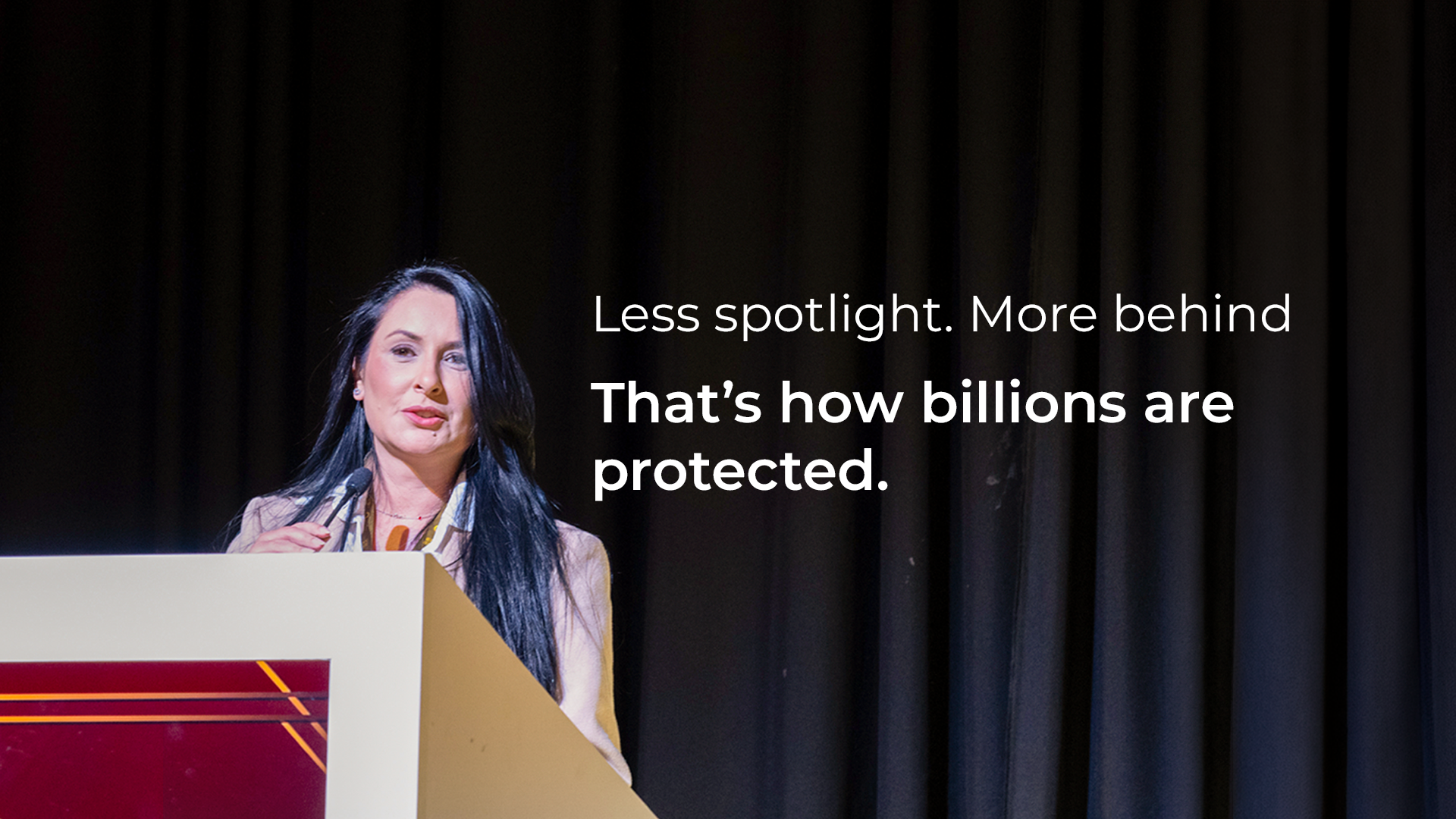
Less spotlight. More behind the scenes.
At the end of the day, business history will not remember the narratives that generated the most noise or likes, but rather the leaders who built the deepest, most ethical, and most resilient structures over time.
How has your board of directors or your company strategically prepared itself to protect assets, guarantee succession, and attract capital sustainably in the face of the current macroeconomic scenario?
Priscila Campos
CEO of Grupo International