
Improper Replacement of the Legal Representative Can Trigger Nullities, Operational Blocks, Personal Liability, and Serious Corporate Governance Failures
By Priscila Campos
CEO, Grupo International
In the Brazilian legal environment, the legal representation of companies with foreign shareholders is not merely an administrative requirement. It is a structural element of the validity of business operations in the country, with direct effects on the ability to contract, operate, move funds, maintain regular registrations, and respond before public authorities and regulators.
Most of the risks faced by foreign companies in Brazil do not stem from the business model or the economic feasibility of the operation, but from how the legal structure is executed. Among these risks, the replacement of the legal representative without strict observance of the applicable rules stands out as one of the most frequent—and most underestimated.
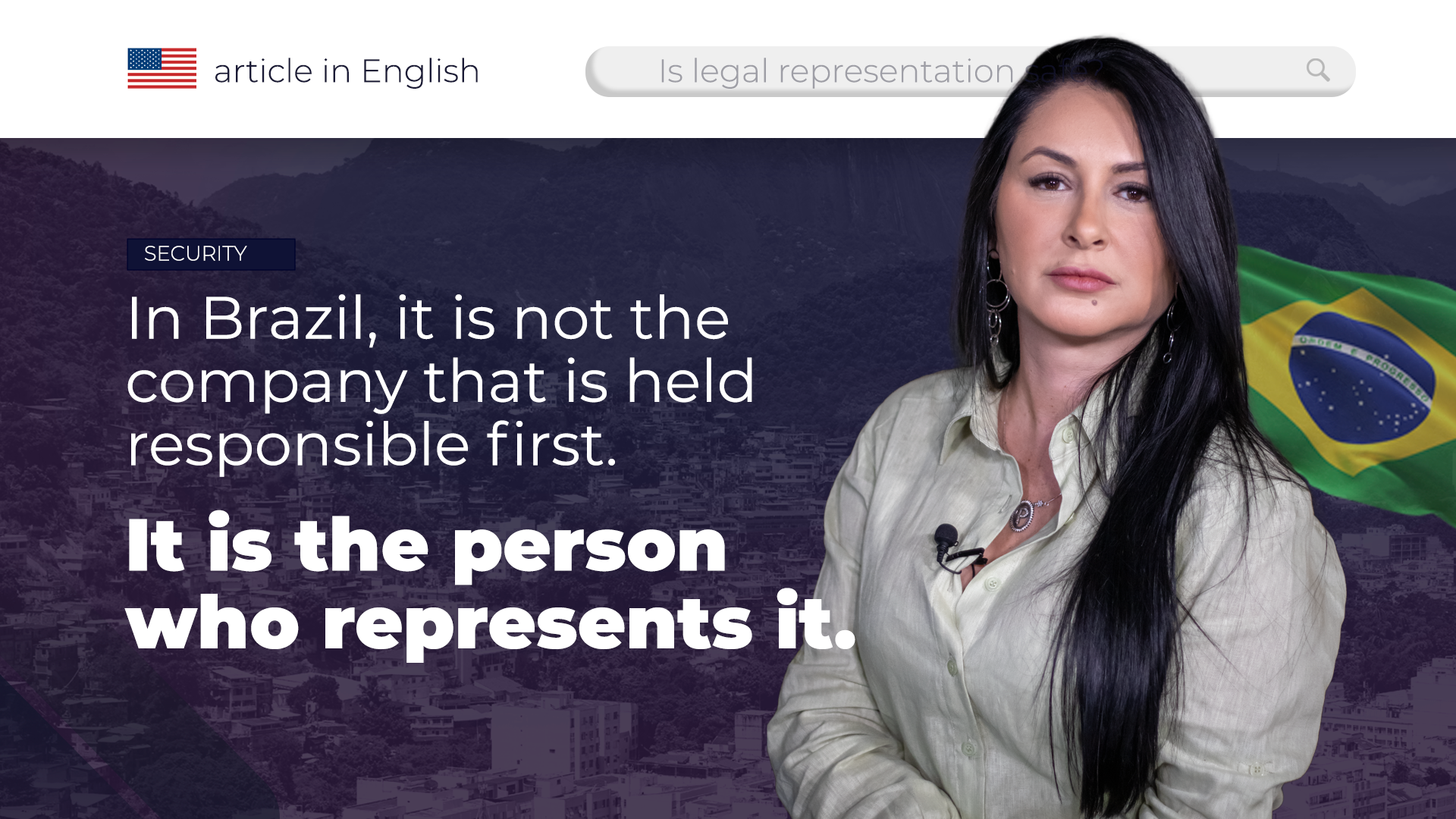
In Brazil, the company does not respond on its own. The person who represents it does.
The requirement for a legal representative domiciled in Brazil derives from the Brazilian Civil Code, the rules of the National Department of Business Registration and Integration (DREI), and the regulations of the State Boards of Trade. From a legal standpoint, a foreign legal entity only produces regular effects before third parties through its duly appointed legal representative, with expressly defined powers and formally registered acts.
This representation is also a prerequisite for tax registration regularity with the Brazilian Federal Revenue Service, the maintenance of bank accounts, the execution of corporate acts, and interaction with regulatory bodies, including the Central Bank of Brazil.
In the foreign exchange and financial sphere, legal representation takes on even greater relevance. The Central Bank of Brazil requires that a company’s registration information be permanently up to date, especially in systems linked to foreign exchange operations, foreign capital, and direct foreign investment. Any inconsistency regarding the legal representative may result in operational blocks, refusal of registrations, suspension of foreign exchange transactions, or regulatory inquiries.
The replacement of a legal representative is legally admissible and common in scenarios such as corporate reorganizations, the entry or exit of investors, mergers and acquisitions, the end of mandates, or strategic realignments at the parent company level. The critical issue does not lie in the replacement itself, but in how it is carried out.
Under Brazilian law, form is substance. The absence of proper formalization compromises the effectiveness of the act.
When a replacement occurs in an incomplete or uncoordinated manner, the legal effects are immediate. Discrepancies in the company’s tax registration (CNPJ), inconsistencies with financial institutions, invalidation of powers of attorney, loss of signing authority, tax and labor challenges, and, in more serious cases, undue personal liability of individuals are consequences frequently observed in practice.
These risks are heightened when operations regulated by the Central Bank are involved, such as international remittances, foreign investment registrations, maintenance of foreign currency accounts, or structures that depend on foreign exchange compliance. The Central Bank does not recognize corporate acts that are not formally registered and consistently reflected in official records.
From a legal perspective, a valid replacement of the legal representative requires: a formal corporate act compatible with the articles of association or bylaws; the express definition of powers and responsibilities; mandatory registration with the competent Board of Trade; immediate updating of the CNPJ with the Federal Revenue Service; and timely communication to financial institutions and regulatory bodies, including the Central Bank, when applicable.
Without compliance with these steps, the replacement does not produce full effects vis-à-vis third parties, exposing the company and its investors to unnecessary risks.
From a corporate governance standpoint, legal representation is part of the company’s system of controls, responsibilities, and transparency. In international operations, it functions as a mechanism for mitigating legal and regulatory risk. It is not an operational detail, but a pillar of asset protection.
In Brazil, it is not intention that protects the investor. It is registration. It is compliance. It is technical execution.
For more than two decades, I have worked in the implementation and legal representation of foreign companies in Brazil, overseeing structures involving international investors, regulated operations, direct relationships with financial institutions, and interaction with the Central Bank and other public authorities. In practice, representing a company means assuming direct responsibility under Brazilian law. Structuring this representation properly means preserving value, operational continuity, and institutional credibility.
The replacement of a legal representative must be treated as a relevant legal act, with direct impact on the validity of corporate acts, regulatory compliance, and investment security.
Governance is not improvised. It is formalized, registered, and legally sustained.
“In Brazil, it is not the company that responds first.
It is the person who represents it.”