
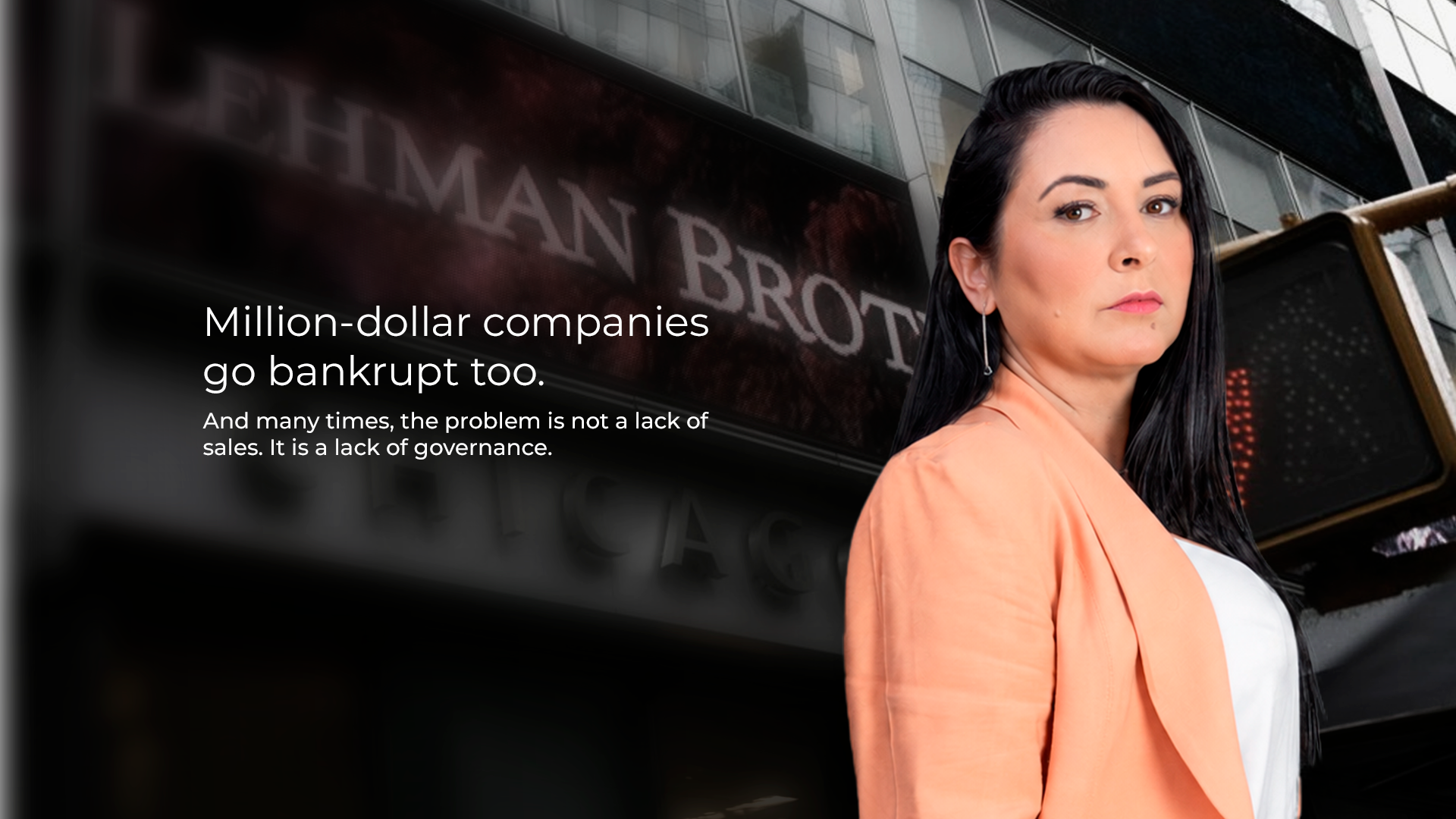
While CEOs celebrate expansion and revenue growth, the number of vulnerable companies continues to rise silently due to the lack of governance, compliance, and corporate protection.
The Brazilian business environment has changed.
But a large number of companies still operate as if corporate structure, compliance, and governance were secondary matters.
In recent years, the market has witnessed the accelerated growth of companies driven by technology, international expansion, new business models, and increased capital circulation. Never before have so many entrepreneurs spoken about growth, valuation, scale, and expansion.
At the same time, a silent problem has begun reaching concerning proportions within the corporate environment: million-dollar companies operating with fragile structures.
And perhaps this is one of the greatest risks of the new economy.
Because financial growth without governance creates vulnerabilities that often do not appear during expansion periods. They emerge when the company begins facing banking pressure, audits, investor entry, shareholder disputes, regulatory requirements, or succession processes.
This is the moment when many entrepreneurs discover that revenue does not mean protection.
According to recent analyses published by Forbes Brasil, international funds, family offices, and strategic investors have begun prioritizing companies with structural maturity, operational transparency, and solid corporate governance mechanisms. The global market no longer evaluates only financial growth. It now analyzes sustainability, risk management, and legal certainty.
This change in the behavior of international capital reveals an important transformation in the modern corporate environment.
Investors have changed.
Banks have changed.
Regulatory authorities have changed.
International requirements have changed.
Today, companies seeking access to structured credit, foreign investment, internationalization, or sustainable expansion must demonstrate far more than commercial capability.
They must demonstrate structure.
And it is precisely at this point that many Brazilian companies become vulnerable.
The absence of governance usually begins silently.
It appears in the confusion between personal and corporate assets.
In the absence of solid shareholder agreements.
In the lack of internal compliance policies.
In the absence of adequate financial controls.
In the informality of strategic decisions.
In the excessive concentration of information and power in the hands of the founder.
For years, many entrepreneurs viewed corporate governance as an issue restricted to large corporations or publicly traded companies.
But this reality has changed.
Today, mid-sized companies, family holdings, wealth groups, agribusiness companies, startups, and international operations face increasingly demanding requirements related to transparency, traceability, and regulatory compliance.
And there is one extremely sensitive point within this discussion: executive liability.
A large number of Brazilian entrepreneurs still believe that the company’s corporate structure is enough to automatically shield the personal assets of partners and executives.
But today’s corporate reality demonstrates exactly the opposite.
Executives now face civil, tax, labor, financial, and even criminal liabilities when the company lacks adequate governance and compliance mechanisms.
In practice, many companies grow faster than their capacity for structural organization.
This imbalance creates hidden risks that compromise not only operations, but the continuity of the business itself.
According to specialists interviewed by Valor Econômico, corporate governance is no longer merely a competitive advantage. It has become a strategic criterion for asset preservation, business succession, and capital attraction.
The financial market has already understood this.
Disorganized companies create insecurity.
And insecurity drives investment away.
The new economy demands transparency.
It demands compliance.
It demands control.
It demands predictability.
Growth without structure may accelerate short-term results, but it usually creates dangerous fragilities in the medium and long term.
Because companies without governance tend to create excessive dependence on the founder.
They tend to face greater difficulty in succession processes.
They face more barriers when raising investment.
They encounter greater banking resistance.
And they carry significantly higher asset risks.
Perhaps the major reflection for CEOs and entrepreneurs in the coming years is not only how to grow.
But how to sustain that growth securely.
Because in the current scenario, the most valuable companies will not necessarily be those generating the highest revenue.
They will be those capable of combining expansion, protection, governance, and structural credibility.
This will be the new difference between companies that simply grow and companies prepared to endure.
Priscila Campos
CEO of Grupo International
Specialist in corporate governance, international structuring, and implementation of foreign companies in Brazil.